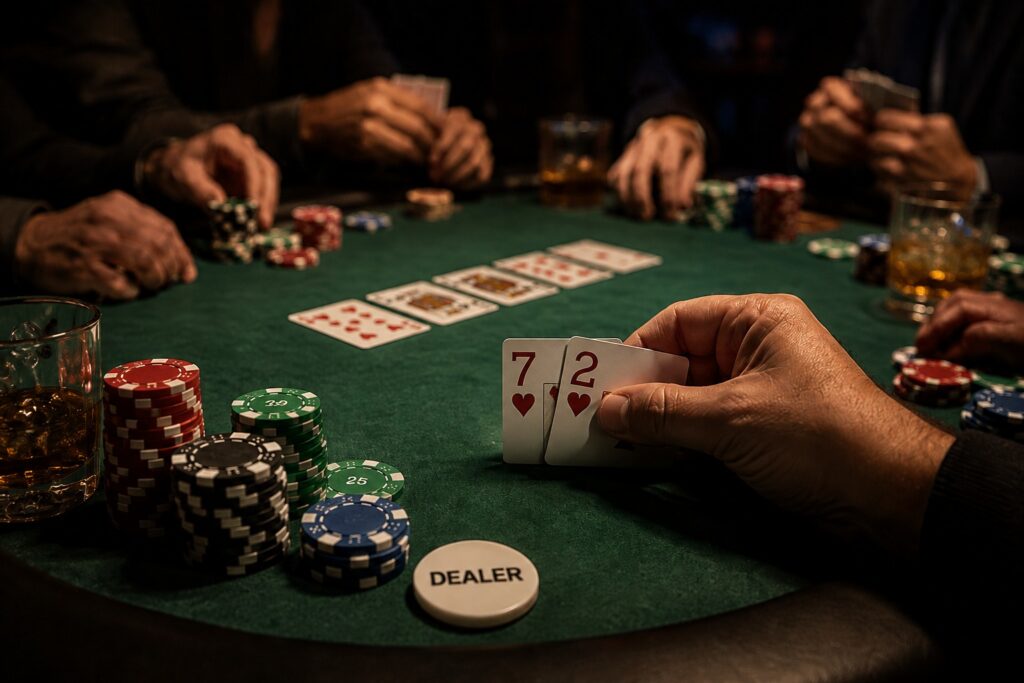
Poker has always existed in a slightly unusual space in Singapore.
For some people, it is simply a social activity among friends, no different from gathering for mahjong during Chinese New Year or watching football together over drinks. For others, it becomes highly competitive, serious and sometimes involves substantial sums of money. The problem is that many people assume poker falls into some kind of harmless legal grey area as long as it happens privately.
That assumption can become dangerous very quickly. Since the introduction of Singapore’s Gambling Control Act, gambling laws have become broader and much stricter than before. Questions about private poker games, home games, buy-ins, rake, insurance bets and even hiring dealers have become increasingly common because people are no longer sure where the legal line actually sits.
And unfortunately, the answer is not always straightforward.
Why the Gambling Control Act Changed Things
Under Singapore’s Gambling Control Act, gambling is generally illegal unless it falls within a licensed, exempted or excluded category.
In practical terms, ordinary individuals are realistically not going to obtain gambling licences for private poker games. This is why most home poker games rely on what the law calls “social gambling.”
The important thing many people miss is that social gambling is not simply a casual label. There are actual legal conditions attached to it. Section 12 of the Gambling Control Act sets out the social gambling exception. The purpose behind it is fairly clear. The law recognises that a genuine social gathering among friends is very different from someone quietly operating a gambling business out of a private property.
But once profit-making, organisation or commercial elements start entering the picture, the legal position changes very quickly.
What the law Actually Allows
A lot of people talk vaguely about “social gambling” but very few actually look at what the law is trying to protect. The key idea behind Section 12 is that the gambling activity must genuinely remain social in nature.
Broadly speaking, social gambling is more likely to fall within the exemption where:
- The gambling takes place in the person’s own home
- The participants know each other socially
- Nobody is operating the activity as a business
- No person derives a profit from organising or facilitating the game beyond their own gambling winnings as a participant
That last point is extremely important. The law is generally far more comfortable with people gambling against each other socially than with somebody earning money from running the game itself. This is why certain behaviours immediately create legal risk.
For example, problems may arise when someone:
- takes rake from pots,
- earns commissions,
- charges recurring entry fees,
- recruits strangers,
- advertises games publicly,
- or operates the game in a structured commercial way.
The more the setup starts resembling a business rather than a friendly gathering, the harder it becomes to rely on the social gambling exemption.
What Counts as “Social” in Practice?
This is where many people unknowingly cross the line.
A casual poker session among long-time friends at somebody’s home usually looks very different from recurring games where strangers are invited through Telegram groups or social media. Even if both games technically happen inside private apartments, the surrounding circumstances matter enormously.
Authorities will usually look at things like:
- How regularly the games occur
- Whether strangers are involved
- Whether somebody is profiting
- Whether the games are being promoted
- Whether the overall setup resembles an organised operation.
The law looks far more at the substance of the arrangement than the labels people attach to it.
Calling something a “friendly game” does not necessarily make it one legally.
Is Rake Allowed?
This is probably one of the clearest danger areas for poker organisers in Singapore.
In many countries, poker rooms make money by taking a percentage from each pot. This is called rake and it is standard practice in licensed casinos and poker clubs overseas. But Singapore treats gambling very differently. The moment an organiser starts taking rake, authorities may view that person as profiting from gambling activity itself rather than simply participating socially in the game.
Even small amounts of rake can create problems because the organiser is no longer merely gambling alongside everyone else. They may now appear to be facilitating gambling for financial gain. For anyone trying to keep a home game safely within the social gambling framework, avoiding rake altogether is usually the safest approach.
Entry Fees Are More Complicated Than People Think
A lot of people assume entry fees are harmless because they are “just covering costs.”
Legally, this area becomes much more sensitive than people expect. The key principle is that a person should not derive profit from the game other than through gambling itself as a participant. This means that once organisers start collecting entry fees, pooled money, membership fees or recurring contributions, they run the risk of being accused of profiting from organising the game.
At that point, the organiser may need to justify exactly where every dollar went.
For example, if someone claims the money was only used for:
- food,
- drinks,
- venue expenses,
- poker chips,
- or shared costs,
they may potentially need to provide a detailed breakdown showing that no actual profit was made from hosting the game itself.
This is why organisers need to be extremely careful whenever money is collected outside the gambling activity itself. What begins as “everyone contributing for snacks” can sometimes become legally complicated once regular collections or structured payments start happening repeatedly.
Poker Insurance Is a Legal Grey Area

Poker insurance is one of the more complicated and less clearly defined areas under Singapore gambling law.
For players unfamiliar with the concept, insurance typically arises during large all-in situations where one player pays another amount to reduce variance or hedge risk depending on how the hand eventually runs out. The law does not specifically spell out poker insurance arrangements clearly, which means the legal position depends heavily on how the arrangement actually works in practice.
One interpretation is that insurance is simply another form of gambling between players already involved in the hand. Under this view, insurance is basically a side bet linked directly to the poker game itself.
If that interpretation is accepted, the insurance arrangement may potentially fall within ordinary social gambling activity. Another interpretation is that insurance may become a separate commercial profit mechanism distinct from the game itself. And this is where things can become legally risky.
Our specialist lawyers take the view that where the insurance is bought and sold directly between players already participating in the game, it would likely be treated as part of the gambling itself, essentially a side bet on the outcome of the hand. In that scenario, it is more likely to remain within the social gambling framework. However, the situation changes significantly if the insurance is being provided by someone outside the game.
For example, imagine a situation where players repeatedly contact an external person with substantial funds every time a large pot occurs, and that outsider “sells insurance” regularly for profit. At that stage, the arrangement may begin looking far more commercial and separate from the social poker game itself. As with many issues in criminal law, the legal outcome depends heavily on the exact facts involved.
This is why players should be extremely cautious about introducing structured insurance arrangements into private poker games, especially where outsiders or profit-making elements become involved.
When Does a Home Game Start Looking Illegal?

This is usually where people get caught off guard.
A poker game does not suddenly become unlawful because ten friends sit around a table with chips. The issue is almost always the surrounding structure.
Once games become:
- Hosted outside a personal home,
- highly organised,
- regularly scheduled,
- publicly promoted,
- commercially managed,
- or profit-driven,
they begin looking less like social gatherings and more like private gambling operations. And that is exactly when the legal risks increase.
A genuine home game among close friends looks very different from a semi-professional poker setup quietly operating every weekend from a condominium unit.
Perhaps the most crucial aspect to these rules is that the social gambling can only take place in a home. The moment it happens anywhere else like an office, it automatically becomes illegal gambling.
What About Hiring a Dealer?
Many people are surprised to learn that hiring a dealer is not automatically illegal.
However, having paid dealers, recurring schedules, structured operations and organised systems can contribute to the perception that the poker game is operating commercially rather than socially.
There may also be separate legal considerations affecting dealers themselves depending on the exact role they play in the operation.
Hiring a dealer for your game is entirely legal. There is no express prohibition against this. Our lawyers are confident that as long as you comply with all the regulations under Section 12, you can legally have a dealer facilitate the game.
Final Thoughts
Poker is not automatically illegal in Singapore. But the space for lawful social gambling is much narrower than many people realise.
Most people who run into legal trouble never intended to operate illegal gambling businesses. In many cases, the games simply became more organised, more commercial, and more structured over time without anyone stopping to think about where the legal line actually sat. The key issue under Singapore law is usually not the poker itself. It is whether someone has started profiting from organising or facilitating the gambling activity beyond participating as an ordinary player.
In practice, the safest poker games are usually the simplest ones:
- private,
- genuinely social,
- among actual friends,
- without commercial structures,
- and without anyone running the game like a business.
Once the setup starts resembling an operation rather than a gathering, the legal risks increase significantly.
Need Advice on Gambling Laws in Singapore?
If you are organising poker games, participating in private gambling setups or facing questions about whether a particular arrangement complies with Singapore law, it is important to understand your position properly before assumptions become legal problems later on.
Seeking legal advice early can help you better understand the risks, your obligations, and the possible consequences under Singapore’s Gambling Control Act.
FAQs
Can the police investigate a private poker game held inside a condominium unit in Singapore?
Yes, they can. Many people assume that activities conducted inside private homes or condominium units are automatically protected from scrutiny but that is not necessarily true under Singapore law. If authorities receive complaints from neighbours, observe suspicious activity or believe that unlawful gambling may be taking place, investigations can still happen even if the game is hosted in a private residence. Factors such as frequent visitors, unusually large gatherings, loud activity or recurring games may draw attention.
Is it illegal to play poker online with friends in Singapore?
Online poker is generally treated far more strictly than physical social games. Even if the players know each other personally, online gambling laws in Singapore can still apply depending on how the game is conducted and whether money is involved. Using foreign poker platforms, private poker apps or online clubs may expose participants to additional legal risks under Singapore’s remote gambling regulations.
Can foreigners or tourists join private poker games in Singapore?
The law itself does not only apply to Singapore citizens or permanent residents. Foreigners and tourists can also face legal consequences if they participate in unlawful gambling activities while in Singapore. Many visitors mistakenly assume that casual poker games are tolerated because they may be common in other countries but Singapore’s gambling laws are generally stricter than those in many other jurisdictions.
Does using poker chips instead of cash make a game legal in Singapore?
Not necessarily. The law looks at the substance of the arrangement rather than the physical form of the bets. If poker chips ultimately represent money, prizes or items of value, the activity may still qualify as gambling under Singapore law. Simply replacing cash with chips does not automatically remove legal risk.
Can someone get into trouble just for attending a poker game?
Potentially, yes. While organisers often face greater legal exposure, participants themselves are not automatically immune from investigation or enforcement action. Much depends on the circumstances of the game, how it is organised and whether the activity falls outside lawful social gambling exceptions.
Are cryptocurrency poker games legal in Singapore?
Using cryptocurrency instead of cash does not necessarily avoid gambling laws. If players are wagering assets that carry monetary value, authorities may still regard the activity as gambling. In some situations, the use of cryptocurrency can even create additional regulatory complications because digital assets may fall under separate financial or payment-related regulations.
Can poker tournaments be organised legally in Singapore?
Organising poker tournaments is significantly more complicated than hosting casual games among friends. Once tournaments involve structured entry systems, prizes, sponsorships, publicity or large groups of participants, organisers may face serious legal and licensing issues. In Singapore, properly licensed gambling operations are extremely limited and unauthorised tournament setups can attract regulatory attention quickly.
What happens if no money changes hands during the poker game?
If no money, prizes or items of value are involved, the activity may fall outside the legal definition of gambling altogether. However, authorities may still examine whether there are indirect rewards, hidden payments or other arrangements linked to the game. The overall context still matters.
Can neighbours report suspicious poker games in Singapore?
Yes. Complaints from neighbours are one of the most common ways private gambling activities come to the attention of authorities. Frequent late-night visitors, noise, smoking, disputes or unusually regular gatherings may cause neighbours to file complaints with building management or the police.
Is social gambling treated differently during festive seasons like Chinese New Year?
Social gambling during festive periods such as Chinese New Year has traditionally been more culturally accepted in Singapore especially in family settings. However, the Gambling Control Act still applies. The law does not automatically exempt gambling activities simply because they occur during festive celebrations. Large-scale or profit-driven gambling arrangements may still create legal risks regardless of the occasion.
Can someone host poker games as a “members-only” club in Singapore?
Labelling a poker setup as a “private club” or “members-only” arrangement does not automatically make it legal. Authorities will usually examine how the operation actually functions. If money is being made from organising games or if the setup resembles a gambling business in practice, calling it a private club may offer little legal protection.
What should someone do if they are being investigated for illegal gambling in Singapore?
Anyone contacted by the police or investigated in relation to gambling activities should take the matter seriously and seek legal advice as early as possible. Gambling offences in Singapore can carry significant penalties depending on the allegations involved. Early legal guidance may help individuals better understand their rights, obligations and potential legal exposure.