Most conversations about poker laws in Singapore usually focus on players or organisers. Dealers are often forgotten entirely. But in reality, many people who work around poker games are quietly wondering the same thing: “If the game gets raided or investigated, can the dealer get into trouble too?”
We understand why many poker dealers feel uncertain about seeking legal advice. Most dealers are not organisers, syndicate operators or people profiting heavily from gambling activities. In many situations, they are simply regular working individuals trying to earn an income by performing a technical role at the table. They do not own the games, control the profits or make decisions about how the operation runs.
At the same time, dealers are often the first people to panic when investigations happen because they are physically present at the game and may not fully understand where the legal boundaries actually sit.
Many people assume that the moment money and poker are involved, everyone at the table is automatically breaking the law. On the other hand, some believe poker dealers are completely protected because they are “just doing a job.”
The legal position is actually more nuanced than that. Under Singapore’s Gambling Control Act, the law does not simply look at someone’s title or presence at the game. Instead, it focuses heavily on the actual role the person played and whether they were involved in assisting or managing the gambling operation itself.
This distinction is extremely important for poker dealers because a dealer who strictly limits their role to technical dealing duties may occupy a very different legal position from someone involved in organising, coordinating or facilitating the operation behind the scenes.
Simply Dealing Cards Is Not Automatically Illegal
Surprisingly, being a poker dealer is not automatically against the law.
If someone’s role is genuinely limited to dealing cards, pushing pots, counting chips and controlling the flow of the game, the law may view that person very differently from the organiser running the operation behind the scenes.
In many ways, a dealer performing only technical table duties is similar to any other service worker. They are carrying out a function much like a waiter serving food or a chef preparing meals in a restaurant.
That is why a dealer can generally still:
- receive a salary,
- be paid hourly or
- collect tips from players
without automatically committing an offence.
This is the part many people find surprising. Even if the poker game itself later turns out to be unlawful, a dealer who strictly stayed within a limited dealing role may not necessarily be treated the same way as the people organising or managing the game.
Importantly, this distinction is not accidental. Under Section 45 of Singapore’s Gambling Control Act, Parliament specifically identified certain types of conduct that may be presumed to amount to assisting in the management or operation of unlawful gambling activities. These include things such as organising the operation, handling logistics, managing players, facilitating financial arrangements and other operational involvement behind the scenes.
What is highly significant is that the act of merely dealing cards or facilitating the gameplay itself does not appear within these presumptions.
That omission matters. If Parliament had intended for the simple act of dealing poker hands to automatically amount to assisting an illegal gambling operation, it could easily have stated so expressly within the legislation. Instead, Parliament deliberately chose not to include dealing cards within the list of presumed management activities.
Legally, this is one of the clearest indicators that poker dealing by itself is not automatically treated as criminal conduct under the Gambling Control Act. However, this protection becomes much weaker once the dealer begins stepping outside pure table duties and becomes involved in operational matters surrounding the game.
Poker Dealing Versus Other Types of Gambling Dealers
Not all gambling dealers are viewed equally under the law. In many gambling environments, the dealer is directly assisting a “house” or “bank” which profits from the players’ losses. Games such as baccarat, roulette or certain casino-style setups usually involve a central operator financially benefiting from every round being played. In those situations, the dealer may appear much more closely tied to the actual gambling operation itself.
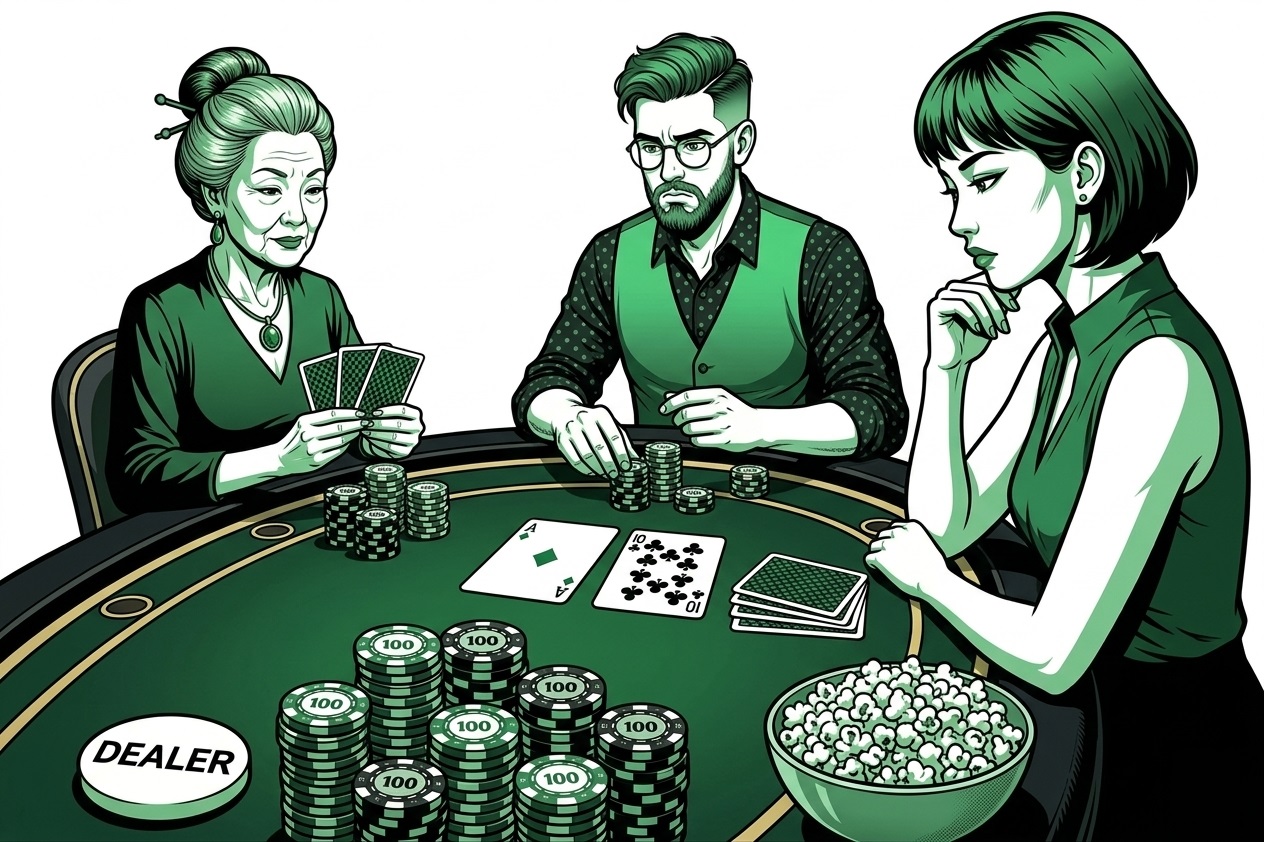
Poker is often different. In a typical poker game, the dealer does not usually represent a house competing against players. Instead, the dealer facilitates the game collectively for all participants at the table. The players compete against one another, not against the dealer.
This distinction can become legally important. A poker dealer who simply distributes cards, manages betting rounds and controls gameplay mechanics may appear far less involved in the underlying gambling operation compared to a dealer working directly on behalf of a gambling bank or house.
In other words, the dealer in a poker game is often viewed more as a neutral facilitator of gameplay rather than an active participant in profiting from the gambling activity itself. This does not mean poker dealers are immune from legal consequences. However, it does help explain why the culpability of a poker dealer who remains strictly within technical dealing duties is often lower than individuals actively helping operate gambling businesses or house-backed games.
Where Dealers Usually Get Into Trouble
In real life, poker games are rarely as clean-cut as people imagine.
At first, someone may only be hired to deal cards. But over time, especially in regular games, the dealer often becomes part of the larger operation without even realising it.
- Maybe the organiser asks them to message players about tonight’s game.
- Maybe they help coordinate who is coming.
- Maybe they start collecting buy-ins because “it’s easier.”
- Maybe they help transfer money to winners after the session.
Individually, these things can seem harmless. But together, they begin to paint a very different picture. At that stage, the dealer is no longer simply dealing cards. They may now appear to be helping run the gambling setup itself and legally that changes everything.
The Law Focuses Heavily on Facilitation
Singapore’s gambling laws are designed to target the people keeping unlawful gambling operations running.
So when authorities investigate a poker setup, they usually look beyond who was sitting at the table. They want to understand who was organising, coordinating, managing or facilitating the activity behind the scenes.
This is why certain actions can suddenly become legally risky for dealers.
For example, a dealer who:
- recruits players
- invites strangers into games
- handles deposits or payouts
- manages player lists
- secures venues
- arranges schedules
- or acts as the organiser’s assistant
may be viewed very differently from someone who simply shuffled cards for a few hours and went home. The problem is that many dealers do not realise where the line actually sits until things have already gone wrong.
What Happens to a Poker Dealer Who Works in an Illegal Poker Game?

This is ultimately the question most dealers want answered.
The reality is that a poker dealer who strictly limits their role to dealing cards, distributing chips and controlling gameplay mechanics will generally occupy a very different legal position from organisers or managers of the gambling operation.
As long as the dealer confines their work purely to technical dealing duties and does not cross into assisting with management or operational functions, they are generally unlikely to face charges for assisting in the operation of the unlawful gambling activity itself. More importantly, they would generally not be facing imprisonment for such offences.
However, dealers must be extremely careful not to cross that line.
The moment a dealer starts:
- recruiting players,
- managing communications,
- collecting money,
- organising logistics,
- handling payouts,
- securing venues or
- assisting the organiser operationally,
their legal exposure changes significantly. At that stage, they may be viewed as assisting or managing the unlawful gambling operation and imprisonment then becomes a very real possibility.
As long as the dealer does not cross into these operational roles, the maximum legal consequence will usually be limited to an offence under Section 26 of the Gambling Control Act for being present in an unlawful gambling place.
In practical terms, this generally means the dealer is treated somewhat similarly to a player, although the Court may impose a slightly higher fine because the dealer was performing a functional role within the game.
For first-time offenders, fines commonly fall within the region of approximately SGD $2,000 to $4,000 depending on the specific facts of the case.
“Helping Out” Can Become a Serious Problem
One of the most common situations happens in private poker circles where everyone knows each other socially.
Because the environment feels informal, people naturally start helping one another. A dealer may assist with setting up tables, contacting regular players or coordinating timings simply because they are around often.
Nobody thinks of it as “running an illegal gambling operation” but if authorities later investigate the game, those same actions may suddenly become very important.
The law usually looks at the overall role the person played not just isolated moments. So even if someone never considered themselves an organiser, their involvement behind the scenes may still raise questions about whether they were helping facilitate the gambling activity.
What About Dealers in Home Games?
Under Singapore law, poker games conducted outside a private home are generally illegal. This means games held in commercial venues, offices, clubs or other non-private locations carry significant legal risks for everyone involved including dealers.
However, simply being held inside a private home does not automatically make a poker game lawful. There are additional legal requirements and restrictions which determine whether a home game falls within Singapore’s social gambling exemptions. For dealers, the key issue remains the same: what role they personally played in the game. A dealer who strictly limits themselves to dealing cards may occupy a very different legal position from organisers or individuals managing the operation.
There are several important legal considerations surrounding private home poker games. For a more detailed explanation of the rules surrounding home poker games and social gambling exemptions, please refer to our separate guide on hosting poker games in Singapore.
Tips Are Usually Not the Problem
Another common concern among dealers is whether accepting tips or receiving a salary is illegal.
Generally speaking, tips and salary for dealing cards are allowed. A dealer who is simply being paid for performing technical table duties is usually viewed very differently from someone involved in managing or profiting from the gambling operation itself. The legal risks usually arise when the dealer becomes financially tied to the operation beyond ordinary dealing compensation.
For example, problems may arise if the dealer:
- takes a percentage of the game’s profits,
- shares operational earnings,
- profits directly from the gambling activity itself or
- becomes involved in financial management or payouts.
The more financially integrated a dealer becomes in the operation, the harder it becomes to argue that they were merely providing a neutral dealing service. Anything beyond ordinary salary or tips risks being viewed as assisting in the management of the gambling operation.
Why This Distinction Matters
A lot of poker dealers assume the law works in a very simplistic way either everyone is guilty or nobody is.
But Singapore’s gambling laws are usually far more fact-specific than that. Two people can be standing in the same room during the same poker game yet face completely different legal exposure depending on their roles. One person may simply be a player. Another may be running the operation. A third may be dealing cards professionally without helping organise anything at all.
From a legal perspective, those distinctions matter and in many cases, small actions behind the scenes become far more important than what happened openly at the poker table itself.
Industry Leading Specialised Expertise
Our team is one of the most specialised and experienced in this area of law, having secured full acquittals and fines for multiple poker dealers who initially came to us facing the possibility of imprisonment. These cases often involve highly fact-sensitive legal distinctions. Much depends on whether the dealer merely performed technical table duties or crossed into operational involvement connected to the gambling setup itself.
Our team has extensive experience carefully analysing the surrounding facts, identifying the dealer’s true level of involvement and presenting those distinctions clearly before both the Prosecution and the Courts.
In many situations, dealers are initially investigated under the assumption that they were assisting in running the operation. However, once the factual realities are properly examined, it may become apparent that their role was far more limited than first alleged. This area of law requires not only technical knowledge of the Gambling Control Act but also a practical understanding of how poker games actually function in real life.
Case Study
In one recent case handled by our team, our client was facing a serious charge of assisting an unlawful gambling operation. The offence carried a mandatory imprisonment sentence.
Our client had worked as a dealer in the poker game and the authorities initially took the position that he had crossed into assisting the operation itself. We made detailed Representations to the Prosecution explaining the true nature and extent of our client’s involvement. Unfortunately, those representations were initially rejected.
The matter then proceeded to a Criminal Case Resolution (CCR) hearing before a senior judge in the State Courts. During the hearing, His Honour agreed with our submissions and indicated that he did not believe the more serious charge had been properly made out against our client based on the actual facts.
Following this, the Prosecution reconsidered its position and amended the charge to one under Section 26 of the Gambling Control Act instead. This offence relates to being present in an unlawful gambling place and is commonly the type of charge faced by players themselves. Importantly, it does not carry mandatory imprisonment.
Our client subsequently pleaded guilty to the reduced charge and was sentenced to a fine rather than imprisonment. The case illustrates how critical the factual distinctions can become when assessing a poker dealer’s true legal exposure.
Final Takeaway
Many poker dealers in Singapore wrongly assume there are only two possibilities: either they are completely safe because they are “just dealing cards,” or they are automatically guilty simply because they were present at the game.
The law is far more nuanced than that. Under Singapore’s Gambling Control Act, the real issue is not whether someone was physically present at a poker game. The real issue is whether they crossed the line into helping organise, facilitate or manage the unlawful operation itself.
That distinction can completely change the outcome of a case.
A dealer who limits their role strictly to technical gameplay duties will often be viewed very differently from someone involved in the operational side of the gambling setup. But once that line is crossed, the legal consequences become substantially more serious.
For poker dealers, understanding where that boundary sits is not merely helpful. It may ultimately determine whether a case results in a manageable fine or a custodial sentence.
Need Legal Advice About Gambling Investigations in Singapore?
If you have been questioned by the authorities about poker games, private gambling setups or poker dealing activities, it is important to understand your legal position as early as possible.
Early legal advice can make a significant difference particularly in cases where the authorities are trying to determine whether someone was merely present at the game or actively involved in assisting the operation.
Whether you are a player, dealer or organiser obtaining proper legal guidance from an experienced criminal lawyer in Singapore can help you better understand:
- your rights,
- your level of legal exposure,
- potential defences available and
- the realistic consequences you may face under Singapore law.
Every gambling investigation is highly fact-specific and small details often matter far more than people realise at the beginning.
FAQs
Can a poker dealer be arrested even if they never played in the game?
Yes, it is possible. In Singapore, authorities do not only look at whether someone participated as a player. They may also examine whether the person helped facilitate, organise or support the gambling activity in some way. A dealer who never touched the chips as a player can still come under investigation depending on their role in the game.
If I only introduced players to each other once, can that still create legal problems?
Potentially, yes. A single introduction may not automatically amount to a criminal offence but repeated involvement in connecting players, recruiting participants or helping games run smoothly can become legally relevant. Authorities often look at the overall pattern of behaviour rather than one isolated incident.
Can WhatsApp or Telegram messages be used as evidence in gambling investigations?
Yes. Messages discussing poker games, player arrangements, buy-ins, payments, locations or scheduling may become relevant during investigations. Even casual conversations can sometimes be examined to understand how the game was organised and who was involved behind the scenes.
Is it safer for poker dealers to work only at private home games?
Not necessarily. While private home games may appear more informal, the legal risk still depends on how the game operates. If the setup starts looking organised, commercial or profit-driven, authorities may still investigate regardless of whether the game happens inside a private residence.
Can poker dealers legally accept food, gifts or transport reimbursement from players?
Small gestures such as meals or transport reimbursement are generally very different from sharing gambling profits. However, if payments become regular, substantial or tied to the operation of the game itself, they may attract greater scrutiny. Context usually matters more than labels.
What happens if a dealer did not know the poker game was illegal?
Lack of knowledge may sometimes become relevant but it does not automatically prevent investigations or legal consequences. Authorities may still examine what the dealer actually did, how involved they were and whether they reasonably understood the nature of the activity they were assisting.
Can someone become legally responsible just for helping to set up poker tables or chips?
It depends on the situation. Simple physical assistance alone may not necessarily amount to illegal facilitation. However, if the person is repeatedly helping organise games or contributing to the operation in a broader way those actions may be viewed differently when assessed together.
Are Freelance Poker Dealers Legal in Singapore?
Yes. Freelance poker dealers can legally operate in Singapore as long as they strictly limit their role to dealing cards and managing gameplay only. They must not become involved in organising games, recruiting players, handling payouts or managing the gambling operation.
They should also only work in venues that comply with Singapore’s social gambling regulations. Once a dealer crosses into assisting or managing the operation itself, the legal risks increase significantly.
Can poker dealers be questioned by police even if they were only working for tips?
Yes. Receiving tips does not automatically shield someone from investigation. Authorities may still examine the dealer’s wider involvement in the game including whether they assisted with organisation, payments, recruitment or operational matters beyond the poker table itself.
Can a Poker Dealer Refuse to Handle Player Payments or Transfers?
Yes and we strongly advise poker dealers not to involve themselves in payments, cash-outs, inviting players or coordinating player lists.
These are some of the highest-risk activities for dealers because they may create the impression that the dealer is helping manage or facilitate the gambling operation itself. For their own personal safety, dealers should collectively negotiate and insist on staying completely out of these operational aspects of the game and limit their role strictly to dealing cards and managing gameplay only.
Why do some poker dealers become targets during gambling investigations?
In many cases, dealers sit at the centre of the operation and interact with organisers, players, payments and logistics. Because of this, investigators may examine whether the dealer was merely running the table or playing a larger role in helping the game function behind the scenes.
Can social media posts about poker games create legal risks for dealers?
They potentially can. Posting photos, promoting games, tagging locations, discussing upcoming sessions or publicly interacting with poker communities online may sometimes contribute to investigations especially if authorities believe the games were organised or commercial in nature.
What should a poker dealer do after being contacted by the police in Singapore?
It is usually advisable to remain calm, avoid making assumptions about the situation and seek legal advice early. Gambling investigations can become complicated because liability often depends on the exact role a person played. Understanding your legal position before giving detailed explanations can be important.